
'No Budget has so far has addressed the issue of the government's abysmal productivity of capital spending, improving which will be the big game changer. 'But, the government's tight lock on businesses, banks, education, and even essential services like transportation and large parts of infrastructure and healthcare is destroying capital year after year,' points out Debashis Basu.

Alternative investment funds (AIFs) have not seen any significant redemptions from financial institutions even though the 30-day timeline provided by the Reserve Bank of India (RBI) to liquidate their holdings or make full provisions ends recently. Sources said the industry is awaiting certain relaxations or extensions based on the recommendations submitted to the banking regulator. On December 19, the RBI restricted financial institutions and banks from investing in AIFs where there is any downstream link or exposure to a debtor firm.

Stake sales by promoters and private equity/venture capital (PE/VC) investors this year are already exceeding twice those of last year. So far this calendar year, the selling stands at over Rs 87,400 crore, 2.2 times the Rs 39,700 crore worth of shares sold by promoters and PE/VCs in 2022. This year's tally has received a boost from stake sales by Adani group promoters.

The S&P BSE Sensex and the Nifty50 have hit record highs amid the poll outcome-triggered bull frenzy at the bourses. Most analysts feel that the indices are on course to rise further over the next few months - till the general elections - albeit amid intermittent corrections - largely triggered by global developments. Bharatiya Janata Party's (BJP's) win in the three state elections of Madhya Pradesh (MP), Rajasthan and Chhattisgarh, analysts at Jefferies believe, reinforces the consensus expectations of a Modi win 2024 national elections with a greater likelihood of over 300 seats for the BJP.

'Genuine' share transfer gets relief; CBDT lists three scenarios where tax would be levied

Its registration is unusual because the firm appears twice in the RoC database, but different identification numbers.

Ramalingam Kalirajan explains the pros and cons of both investment types.
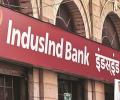
Despite a largely stable December quarter, investors booked profit in shares of IndusInd Bank (IIB) as an increase in slippages took them by surprise. Analysts, on their part, believe investors may, now, wait for actual delivery on slippage decline, potentially limiting near-term upside. "The management has indicated that corporate slippages (from legacy stressed book) have ended and inch up in consumer finance slippages was more one-off, and should meaningfully improve Q4FY24 onwards.

Any government support or incentive to help exporters deal with high freight and insurance costs is unlikely.

If you're a beginner eager to embark on wealth-building journey in the real estate sector, Karan Shetty shares this comprehensive guide on how to get started.

'The global situation is not very good.'

India on Friday asked its citizens not to travel to Iran and Israel amid increasing fears that Tehran may launch an attack on Israeli soil in retaliation to a strike on the Iranian consulate in Syria 11 days ago.

The government is confident of meeting the fiscal deficit target of 5.9 per cent of gross domestic product (GDP) and the nominal GDP target of 10.5 per cent despite pressure in the initial months of FY24, Economic Affairs secretary Ajay Seth told Business Standard. Normally the initial months of any financial year see proportionally a higher fiscal deficit because the expenditure is evenly paced while revenue picks up in the later months, he said. "This year the proportional fiscal deficit so far is much closer to the target than in most other years.

Performance-based incentives were recommended by the 13th Finance Commission, but omitted by the 14th Finance Commission

BlackRock has again reduced the valuation of its share in edtech firm Byju's - this time to about $1 billion, TechCrunch reported on Friday, citing disclosures made by the US-based asset manager. This is 95 per cent less than its peak valuation of $22 billion in 2022. The markdown comes at a time when the company is facing a multitude of challenges, including securing fresh capital, delays in financial reporting and legal disputes with lenders.

Available data obscures the true stress in bank books, and the pandemic will result in balance sheet impairments and capital shortfalls at lenders, RBI Governor Shaktikanta Das said on Monday. Balance sheet impairment and capital shortfalls will be more evident once the regulatory reliefs are rolled back, Das said in the bi-annual Financial Stability Report, asking lenders to augment capital.
Educational technology company Byju's chief financial officer Ajay Goel has quit after completing the audit process for the financial year 2022 and will return to Vedanta, the company said in a statement. The edtech major has roped in industry veteran Pradip Kanakia as senior advisor, and president (finance) Nitin Golani has been given additional responsibility as India chief finance officer (CFO) to handle the finance function of the company.

The World Bank must become Archimedes's lever to help change the world into a more prosperous, inclusive, and sustainable planet in the 21st century. The change in leadership now provides that opportunity, observes Ajay Chhibber.

'Since the NDA took office in 2014, and aggressively since 2019, the Union government seems hell bent on centralising all power and resources, only to fail spectacularly.'

'We expect the bull-market phase to still persist, but now led by large-caps which offer better valuation and benefit from FII inflows.'
'We expect continued pressure on midcaps, but any sharp correction looks unlikely from here on.'

The Congress on Friday alleged that the electoral bonds data has exposed 'corrupt tactics' of the Bharatiya Janata Party such as quid pro quo, seeking donations for the company's protection, kickbacks and money laundering through shell companies.

India's real estate market is poised for growth across categories - residential, commercial, and rental. Currently valued at Rs 24 trillion, or about $300 billion, it is projected to surge to $1.3 trillion by 2034, and then grow further to $5.17 trillion by 2047, indicates a report by the Confederation of Real Estate Developers Associations of India (Credai).

There is a view that heavyweight portfolios like home, finance, defence and external affairs besides education and culture, two ministries with strong ideological hues, will be kept by the BJP, while its allies can get anywhere between five to eight cabinet berths.

The decision by the Reserve Bank of India to introduce a unified regulatory framework on connected lending for all the regulated entities (RE) is expected to reduce the influence of business conglomerates in the Indian lending space, said bankers and experts. "Connected lending pertains to lending to related parties within the same business group. "While the RBI might appear more agreeable to allowing business conglomerates to own banking licenses, it deems it crucial to bolster regulations that would prevent conglomerate-owned banks from gaming the system," said Shivaji Thapliyal, head of research and lead analyst, YES Securities.

'TMFs trump FMPs and FDs when it comes to investing in a high-duration product.'

In an address at a security conclave of the Shanghai Cooperation Organisation in the Kazakh capital, he also underlined the need for holding accountable the sponsors, financiers and facilitators of terrorism, in remarks that came amid Pakistan's continuing support to various terror groups.

On the Sensex chart, Bajaj Finance, Bajaj Finserv, HCL Tech, Tech Mahindra, Infosys, HDFC Bank and ICICI Bank were among the prominent gainers.
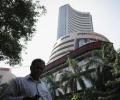
Among the Sensex firms, NTPC, Power Grid, Mahindra & Mahindra, Larsen & Toubro, Sun Pharma, State Bank of India, Titan and Tata Steel were the major gainers. Tata Consultancy Services, Infosys, Axis Bank, Bajaj Finserv, UltraTech Cement and Bajaj Finance were the major laggards.

One smells a rat when cases are settled for too small a price offered either by the highest bidder or the promoter -- within and outside the legal ambit of insolvency process, observes Tamal Bandyopadhyay.

rediffGURU and financial planning expert Colonel Sanjeev Govila (retd) answers your personal finance-related questions.

rediffGURU Ramalingam Kalirajan answers your personal finance queries.

The Adani group is in advanced talks with top sovereign funds based in West Asia to raise up to $2.6 billion for its airport expansion and green hydrogen projects. The group, which expects to close the ongoing financial year ending March with Rs 80,000 crore of Ebitda (earnings before interest, tax, depreciation, and amortisation), has held a series of road shows in London, Dubai, and Singapore with potential investors, briefing them about their future growth plans. The group's flagship, Adani Enterprises, may dilute part of its stake in the airport-holding firm and/or the green hydrogen business to these funds, which are keen to invest in the Indian infrastructure sector, said a source close to the development.

'The vision now is not just to look at national highways as a number of kilometres, but quality as well.'

The size of Budget 2024-25 has increased 6.1 per cent to Rs 47.66 lakh crore because of the rise in expenditure and higher allocation for capital expenditure and social sector schemes.

Do you know what tax-loss harvesting is? Does it help you save tax? Financial planning expert P V Subramanyam offers all the answers.

'Chinese are going bang, bang, bang building 30-35 reactors.' 'We should announce a programme of 50 new reactors and show that we mean business on the ground and not just announcements.'

In the Sensex pack, HCLTech rose the maximum by 3.12 per cent, followed by ITC which gained 2.73 per cent and M&M went up 2.61 per cent. TCS climbed 2.44 per cent. Tech Mahindra, Wipro, L&T and Maruti were among the other major gainers.

In the pre-budget Economic Survey 2010-11, the Union finance ministry made a strong pitch for the pro-growth impact of investment in human capital adding, "fortunately, there is awareness of this in India and efforts are afoot in terms of budgetary allocation and actual initiatives to boost the development of skill and human capital."

'Real estate loans are given in the garb of retail loans, sourcing money cheap from the NHB refinance window.' 'This loophole is being plugged,' notes Tamal Bandyopadhyay.

A new schedule has been added to report income from cryptocurrencies and other Virtual Digital Assets.
 © 2026 Rediff.com - Advertise with us - Disclaimer - Privacy Policy - Sitemap - Feedback - About us - Terms of use - Grievances